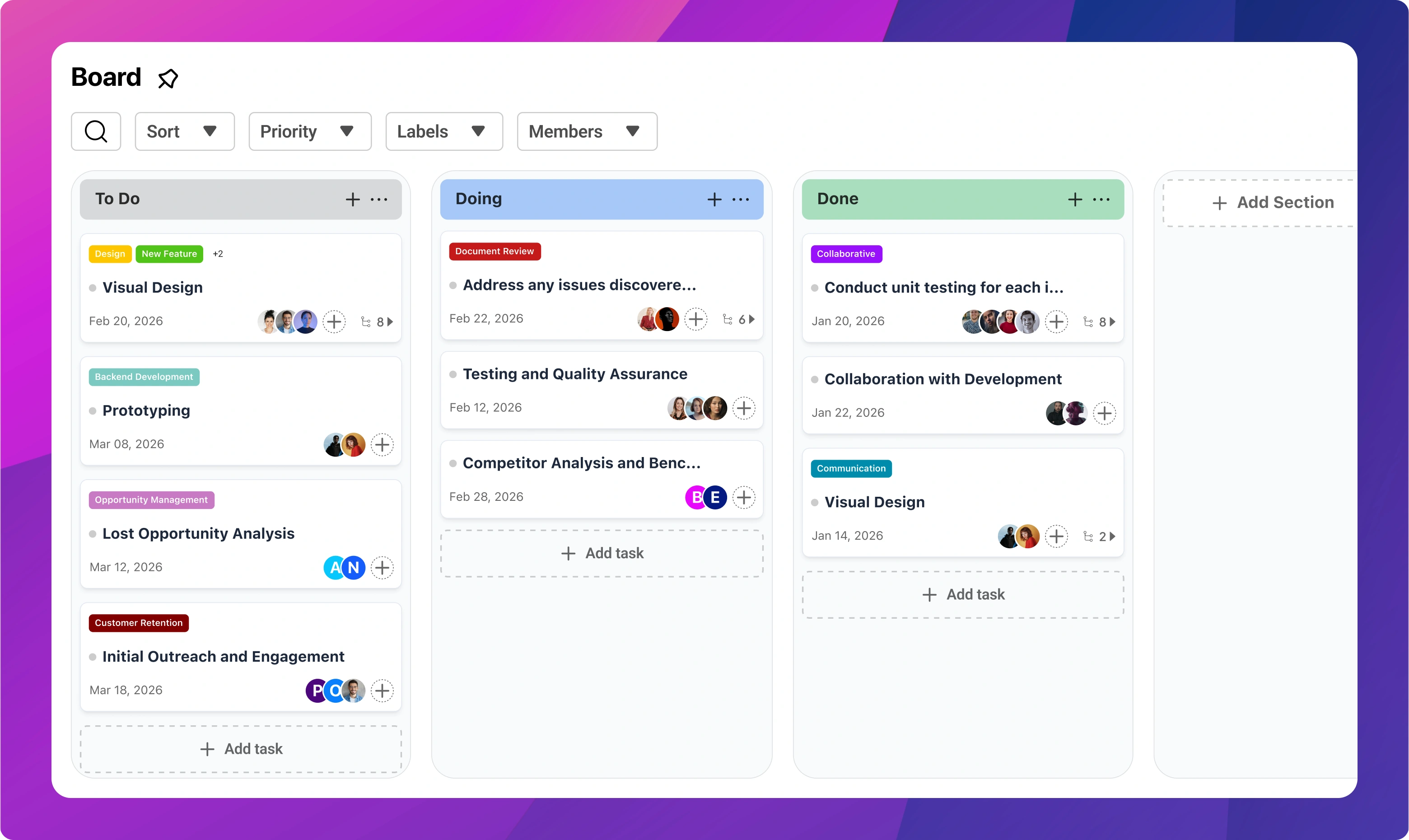
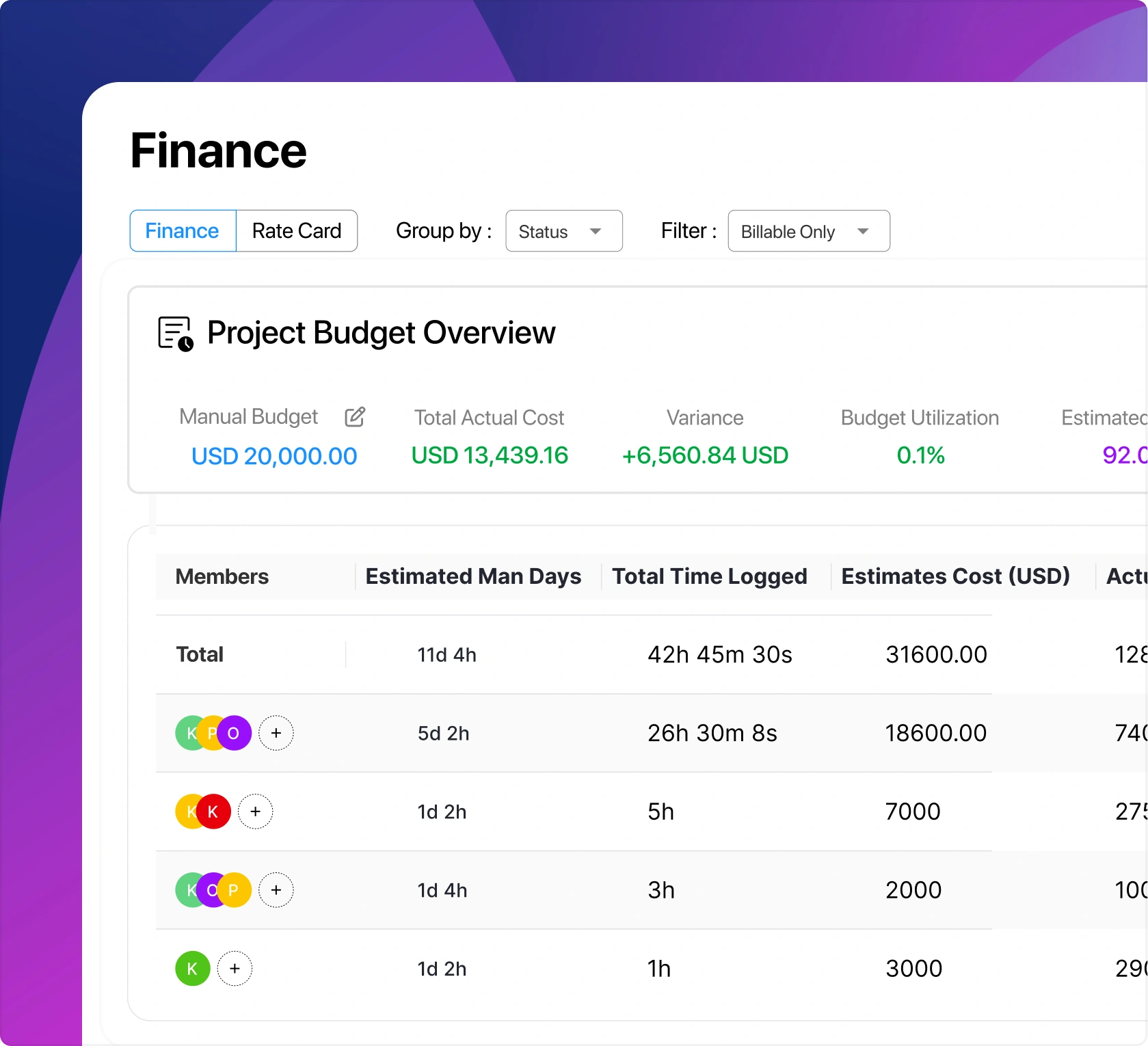
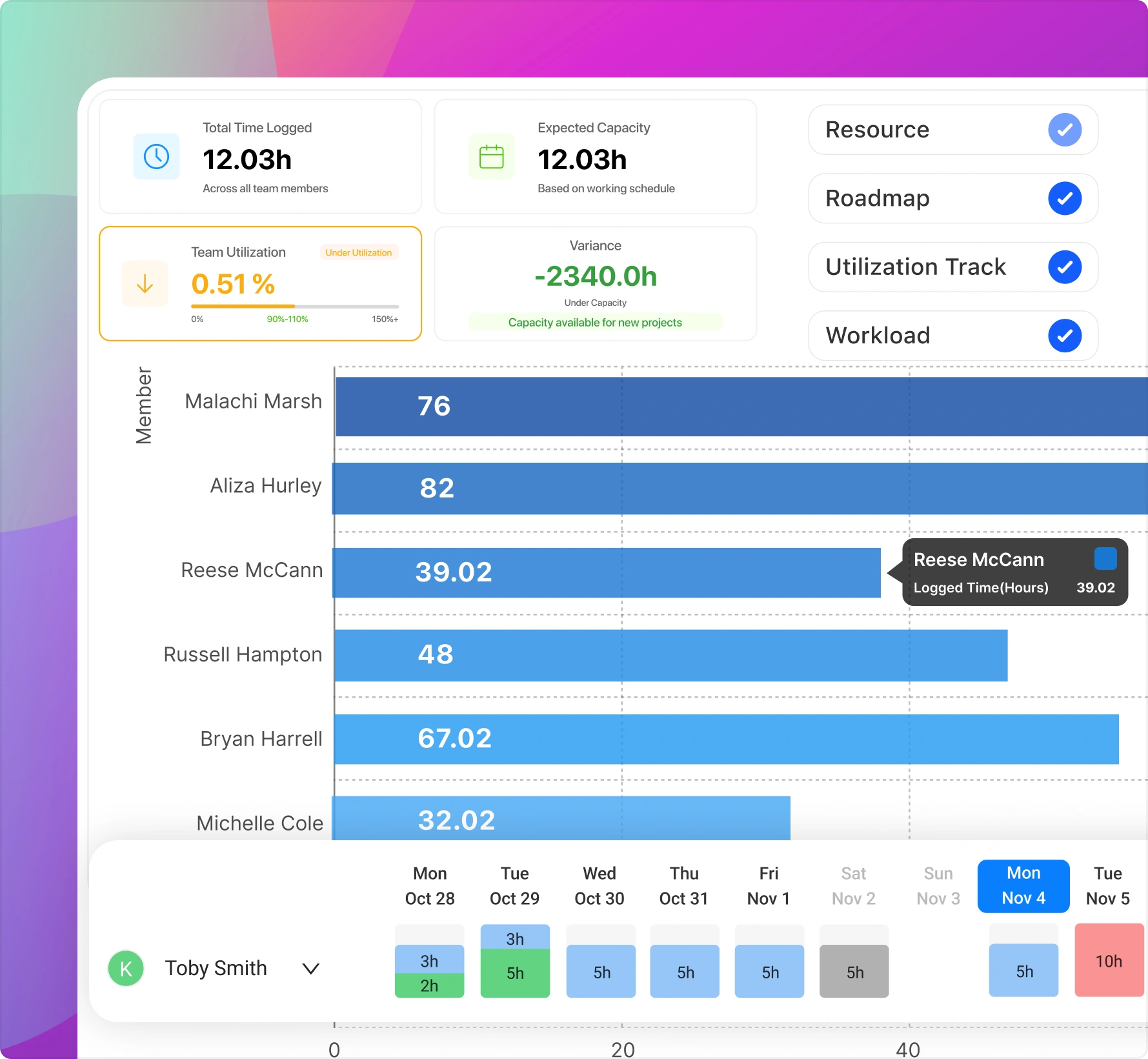
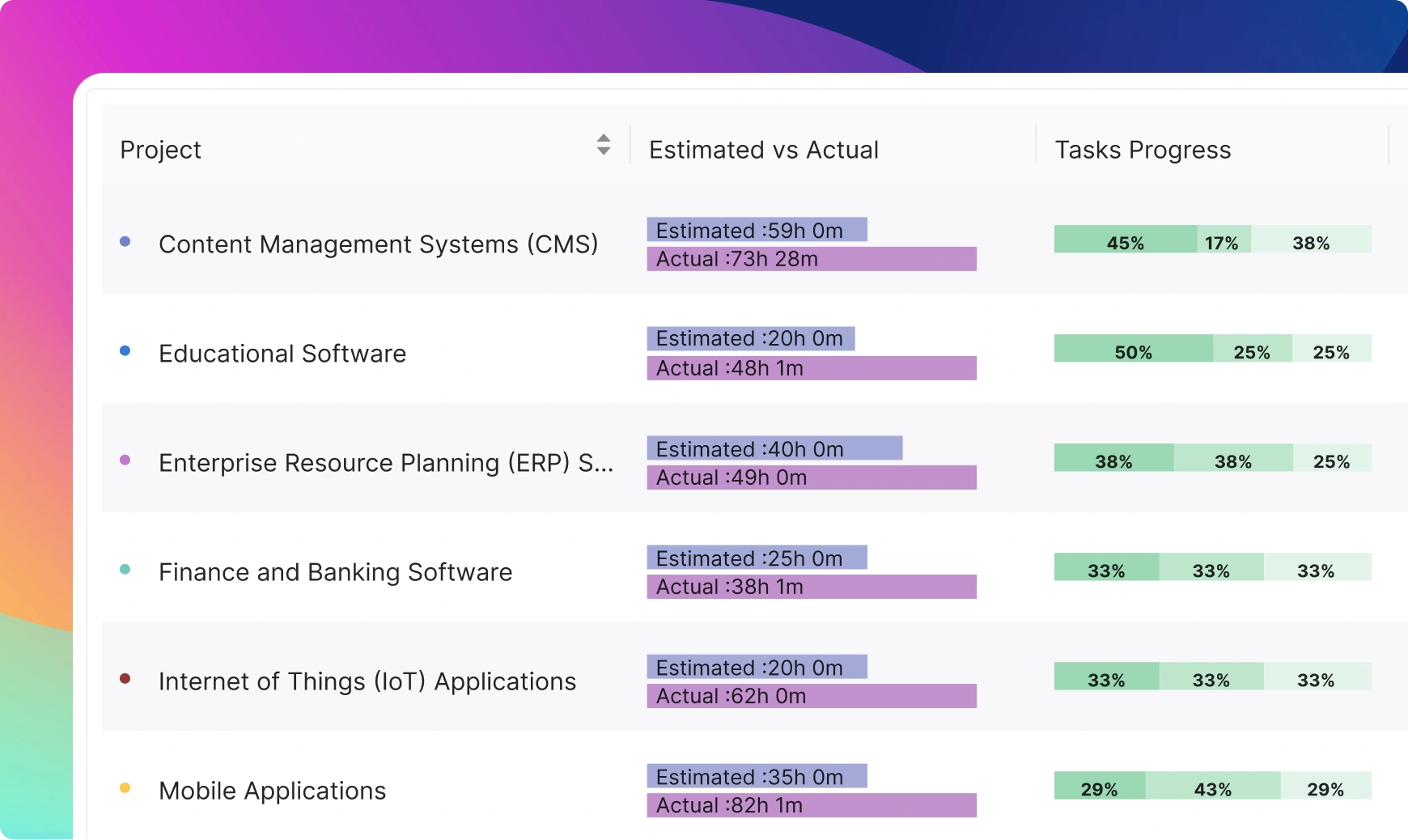
Everything a project needs,
without the plugin shopping
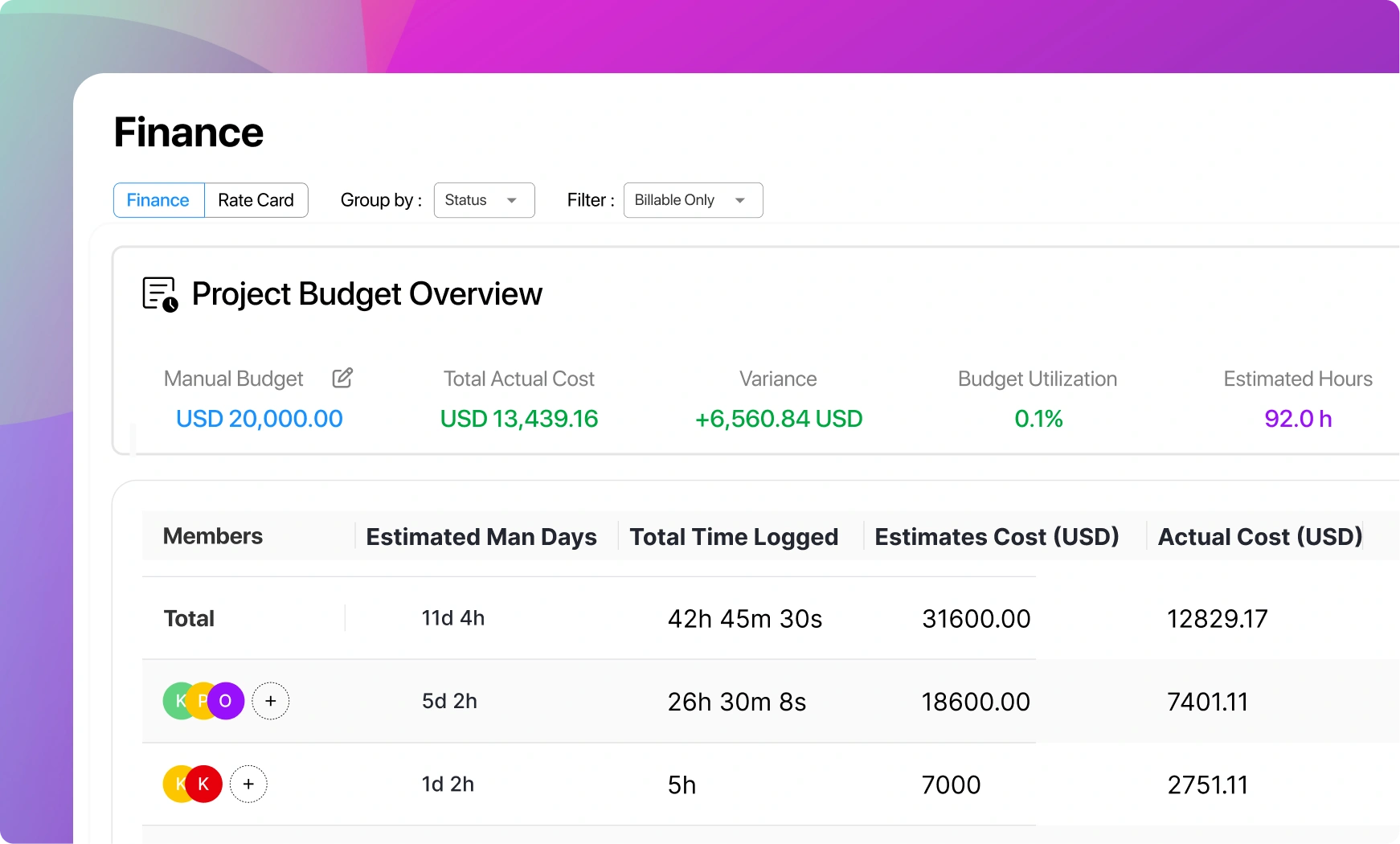
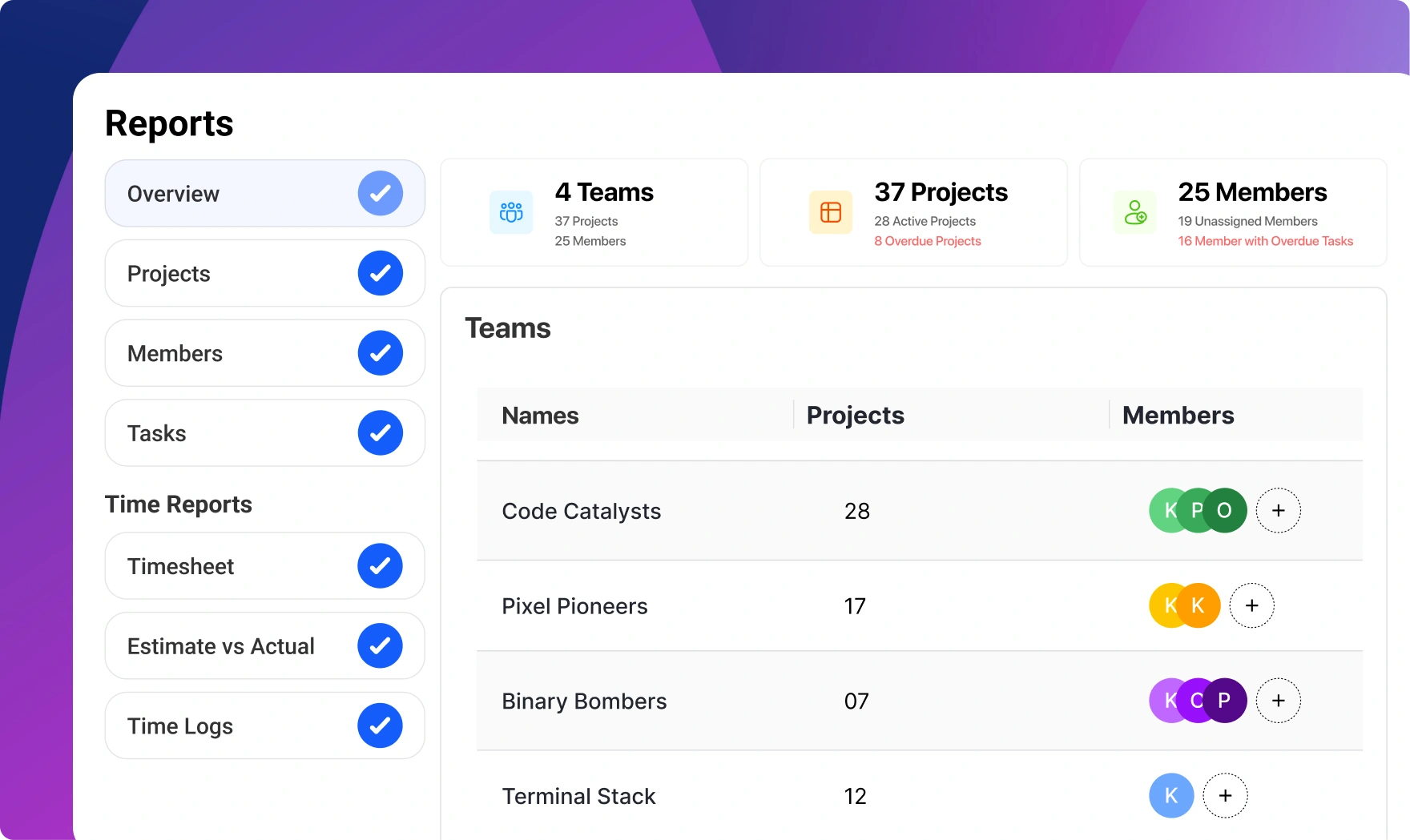
Time tracking, finance, resourcing, and reporting are built into Worklenz, not sold as add-ons.

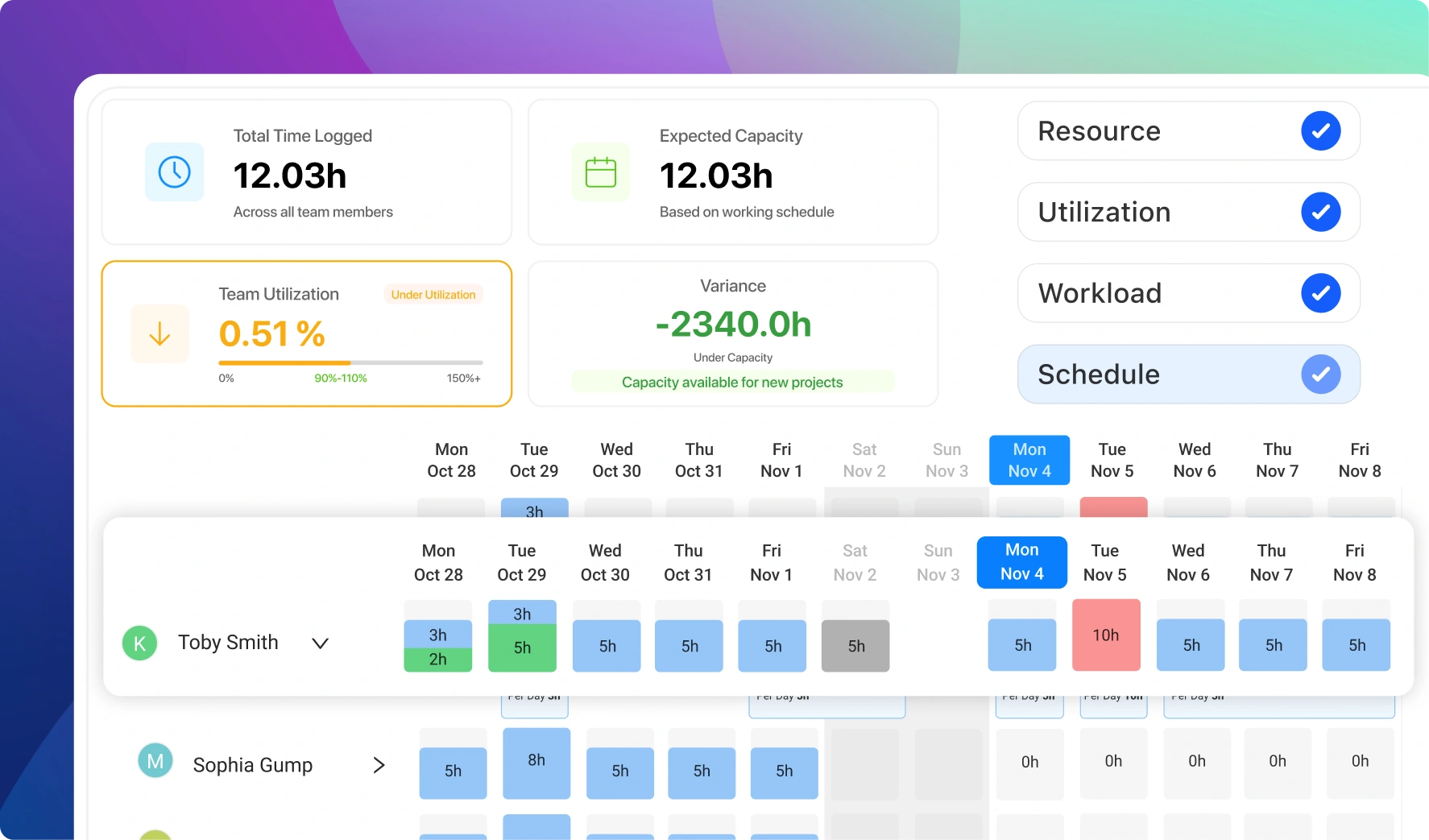
Resource scheduler
Plan assignments weeks ahead with a clear view of everyone's capacity.

Invoice & billing
Turn tracked time and project data into invoices without exporting to another tool.

File management
Attach files to tasks and projects so the latest version is where the work is.

Templates
Save any project structure as a template and reuse it for the next one.

Phases
Group tasks into phases so long projects read as a roadmap, not a wall of tasks.

Daily digest
A summary of what changed, delivered when you want it, instead of constant pings.
What is project management software?
Project management software is a tool for planning work, assigning it to people, and tracking it to completion. At minimum that means tasks, due dates, and some way to see status at a glance. In practice, teams also need the layers around the tasks: how long work takes, what it costs, who has capacity, and what to tell the client or stakeholder who is paying for it.
That second layer is where tools differ most. Task-only tools like Trello handle the board and stop there. Suites like monday.com, ClickUp, and Asana add views and automation but charge per user, and features like time tracking or workload views usually sit in their higher tiers. Capterra's buyer research puts typical budgets at $20 to $40 per user per month, which adds up quickly for a 15-person team.
Worklenz takes a different position: the full stack of project delivery, including time tracking, budgets, resource scheduling, and invoicing, in one open-source platform with a free plan for unlimited users.
How to choose a project management tool
Start with the work you bill or budget for. If projects have deadlines but no financial dimension, most task tools will do. If hours translate to money, pick a tool where time tracking is native, because bolting on a separate time tracker means reconciling two systems forever.
Then check the limits behind the pricing page. Free plans commonly cap users, hide Gantt or timeline views, or exclude reporting. Worklenz's free cloud plan includes unlimited users with up to 3 active projects, and the open-source Community edition removes the project cap entirely when you self-host.
Finally, consider where your data lives. Worklenz is licensed under AGPL-3.0 with the source on GitHub, so teams with strict data requirements can run it on their own infrastructure with Docker instead of trusting another vendor's cloud.
Why teams pick Worklenz
Worklenz was built for teams that deliver projects to clients: agencies, consultancies, software teams, and engineering firms. That focus shows in the defaults. Every task can carry billable time. Every project has a budget view. Clients get a portal with real progress instead of a weekly status email.
The platform is a React and TypeScript application backed by PostgreSQL, actively developed in the open at github.com/Worklenz/worklenz. You can start on the free cloud plan today and move to self-hosted later, or the other way around, because it is the same product either way.
Worklenz vs typical per-seat project tools
A quick comparison against the pattern you see in mainstream per-user tools such as monday.com, Asana, and ClickUp.
| Worklenz | Typical per-seat tools |
| Pricing model | Free plan, unlimited users; Pro from $69/mo flat for 15 users | $9-$25+ per user per month |
| Time tracking | Built in on every plan | Higher tiers or third-party add-on |
| Project budgets & profitability | Built in | Rare; usually needs integrations |
| Invoicing | Built in | Not included |
| Client portal | Built in | Guest seats, often paid |
| Open source / self-host | AGPL-3.0, Docker self-hosting | Proprietary, cloud only |
Competitor details reflect published pricing pages as of mid-2026 and vary by plan.

 Start for Free